

Raiden and Rynn’s Stories
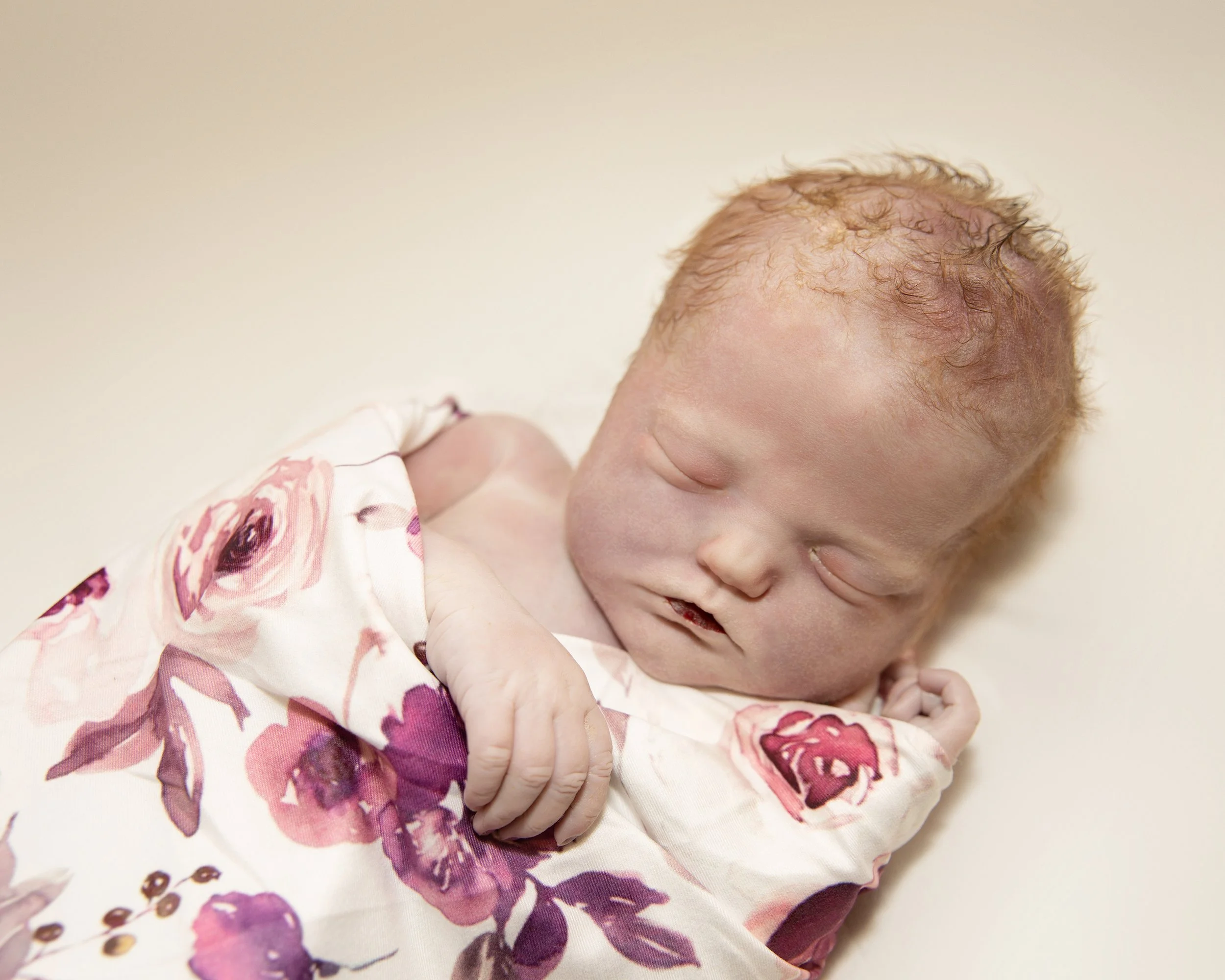
Rynn Kynley Jones
There was a time when our biggest concern was getting everything ready for our baby girl. We were excited and busy preparing for her arrival. We were decorating a room filled with koalas, buying the little things we thought she would need, and talking about what she might look like, who she would become, and what it would be like to bring her home and introduce her to her siblings.
Her name was already chosen: Rynn Kynley. She wasn’t just a baby we were waiting to meet. She was already part of our family.
At 38 weeks, we were so close. We had spent months watching our family grow around the little girl we hadn’t yet held. Everything was set. On March 15, Hayle saw Dr.Daum at 37 weeks and 1 day; Rynn was healthy. Her next appointment was set for Friday, March 22nd; induction was scheduled for April 1st. We were in the final stretch.
Then one night, Hayle didn’t feel her move. At first, we tried not to panic, maybe she was sleeping, maybe she had simply moved into a different position. We couldn’t shake the feeling that something wasn’t right. At 1130 pm on March 21st, Hayle went to the OB emergency room to make sure everything was okay. We expected reassurance. We wanted someone to tell us that Rynn was fine and that we would be meeting our daughter soon.
Instead, we were met with panic, urgency, and sorrow. They brought in all the machines, ran all the tests, called in the specialist, but each one deferred to the next. At 1:10 AM on March 22, 2024, the doctor proceeded to tell us that our daughter no longer had a heartbeat. They put a name to it, an official diagnosis: Intrauterine fetal demise. Everything changed in that moment. The excitement of the days before was replaced by a silence we will never forget.
Hayle still had to deliver Rynn. We still had to tell our family that the baby everyone was waiting to meet wasn’t coming home.
Then came something we never knew existed until we were forced to experience it: the decisions a parent should never have to make. Instead of being asked who we had chosen for a pediatrician, we were asked what funeral home we wanted for our daughter. Instead of installing car seats, we were deciding on burial or cremation. Instead of discussing what she would wear home from the hospital, we were discussing what she would wear for her funeral. We were deciding on caskets, flowers, and services. Instead of planning her first pictures, we were planning how she would be remembered.
These are things you don’t prepare for when you’re expecting a baby. Nobody gives you a checklist for what comes after you deliver your stillborn daughter. Nobody teaches you how to tell your other children that their baby sister isn’t coming home. Nobody tells you what it feels like to walk into a nursery you prepared with so much excitement and realize your baby will never sleep there.
And nobody can truly prepare you for what happens after everyone goes home and the funeral is over. What happens when the world keeps moving, bills still come, work still happens, and people return to their normal lives? Yours doesn’t feel normal anymore; you are not the same person you were just a few short days ago.
We had to learn how to grieve while still being parents. Our other children still needed us, and we had to get up every morning even when getting out of bed felt impossible. We had to figure out how to answer questions, talk about Rynn, remember her, and help our family understand that she was—and always would be—part of it.
We discovered that grief doesn’t have an expiration date. It changes. Some days we could talk about Rynn, and some days we couldn’t. Some days we could laugh and enjoy our family, only to have something completely unexpected bring the pain rushing back: a song, a birthday, a little girl, a nursery, a holiday, or sometimes nothing at all.
We also learned that people don’t always know what to say when a family loses a child. Honestly, neither did we. There were moments when we didn’t need someone to make the pain better. We just needed someone to sit with us in it—someone to remember Rynn, say her name, and remind us that our daughter mattered.
As time went on, we began meeting other families who understood that same pain: parents who had also gone home without their babies and who suddenly had to learn how to live in a world that looked completely different from the one they knew the day before.
We started realizing that our story wasn’t just about what happened to us. It could also become about what we could do for someone else.
We couldn’t change Rynn’s story. We couldn’t bring her home, and we couldn’t take away the pain of losing her. But we could decide what to do with the love we still had for her.
That became the beginning of Raiden and Rynn’s Beacon.
We wanted to create the kind of support we wished every grieving family could have immediately after losing a child—not just words or sympathy, but real people, real support, and practical help. We wanted to offer a reminder that when a family walks out of the hospital without their baby, they don’t have to walk through everything that comes next alone.
Rynn’s life was incredibly short, but her impact on our family has been anything but. She changed the way we look at our children. She changed the way we look at each other. She changed the way we look at grief, and she changed the way we look at our purpose.
We don’t believe we were given this pain for a reason we can always understand, but we do believe we can choose what we do with it. So we choose to remember. We choose to talk about her. We choose to say her name. We choose to keep her part of our family. And we choose to help other families who find themselves standing in a place we never wanted to know.
We have grown since the day we lost Rynn—not because the pain went away, because it didn’t, but because we’ve learned how to carry it. We’ve learned that healing doesn’t mean leaving someone behind. For us, healing has meant learning how to move forward with Rynn still with us.
She is in our family photos. She is in our conversations. She is in the way we love our children. She is in the work we do. She is in every family we are able to help. And she will always be our daughter.
We started this journey excitedly preparing for a baby girl. We never imagined that preparing for Rynn would ultimately teach us how to live with grief, how to love differently, and how to turn our deepest pain into an opportunity to serve others.
We would give anything to have had Rynn’s story end differently, but since we can’t, we are determined to make sure her story continues to make a difference.
For every family who has to make those phone calls, for every parent who has to make decisions at a funeral home that they never should have been asked to make, for every mother and father who walk out of a hospital with empty arms, and for every family trying to figure out how to live after losing a child:
We see you.
We remember you.
And you don’t have to walk this road alone.
This is our story.
This is Rynn’s story.
And this is how we carry her forward.
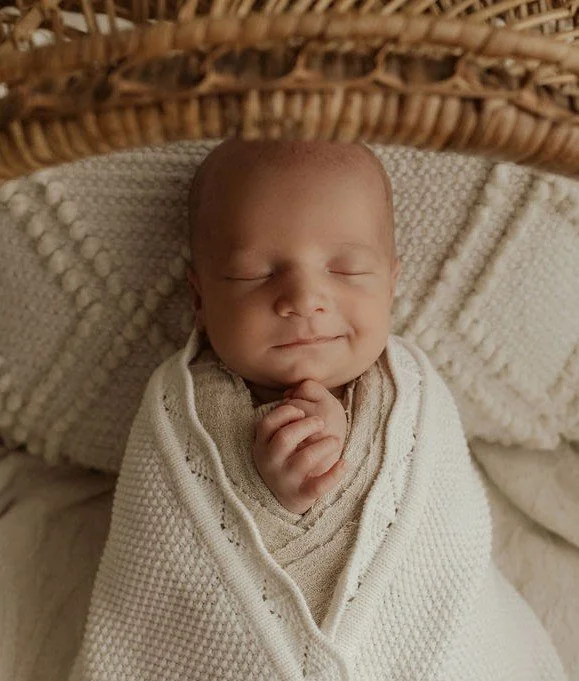
Raiden Edwin Kubecka
Please bare with me, this is not an easy story.
We lost Raiden unexpectedly one night in September. It’s extremely hard to put words to the utter devastation of losing him.
He was perfect. He was beautiful in every way. He was an answer to the prayer of my heart’s desire for a third baby.
His brothers absolutely adored him. I can remember distinctly thinking I was the absolute luckiest mom in the world with three, amazing boys and the best husband.
The doctor had told us early on that he was going to have a genetic condition and I was devastated and worried myself to death about how we would support him and what life would look like. I wish I would’ve just cherished the time we had with him.
When he was about 5 weeks old, I woke up to find him still. As moms do, I put my hand over his face to feel if he was breathing. I still was unsure, so I woke up my husband, who felt the wrongness and went into superhero mode and gave him CPR until the ambulance arrived.
I can only say about the time afterward that I depended heavily on family and friends to watch me while I lived in the absolute hell of my mind. Could I have prevented this? Was
It my fault? I was positive it was. The Coroner called it SIDS. I was sure SIDS was something that happened to other people, but not me. How could it happen to me?
I was somewhere between wanting to live and wanting to die at every moment. I called on God. I asked “Why? why me?”
I hated everyone and everything. I hated the silly and stupid things that people said to comfort me. I felt physically and mentally sick and wondered how I could survive.
Then, God gave me community, and other loss moms carried me through. Because they understand the twisted, thorny vines of emotions I was experiencing.
I am strong enough now to pay it forward. I understand and I see you. Let us help you survive to remember your sweet baby.